Hail, Holy Queen, Mother of Mercy
Our life, our sweetness and our hope.
To thee do we cry
Poor banished children of Eve.
To thee do we send up our sighs,
Mourning and weeping in this valley of tears.
Salve Regina
Over a one hundred year period a practice known as verdingen (indentured servitude) operated in Switzerland. Children were removed from their families and sent to work on farms. It is estimated that between 1860 and 1960, one hundred thousand children were verdingt in this way, a quarter of them in the Canton of Bern. Local parishes paid farmers a monthly allowance to provide disadvantaged children with board and lodging.
Although some treated their charges well, countless children suffered terrible hardship over many years. A veil of silence fell across entire communities as clergy, social workers and villagers chose to ignore the widespread abuse. Teachers who reported that children were being ill-treated often found that their contracts were not renewed at the end of the school year.
I was born in Switzerland and grew up in England. As an adult I lived, worked and raised a family in the town of Biel, near Bern. Yet, in all those years, I never heard mention of the Swiss Verdingkinder. It was not until April 2000 that I read an article in The Guardian titled The Vanishing.1 I mentioned it to my Swiss father-in-law, who told me that two half-brothers from his father’s first marriage had been verdingt when their mother died.
The youngest child, a girl, was not given away, and grew up with him and his brother in the second marriage. Something similar had happened in my own family. My grandmother, Rosa, was the only child of her father, Rudolf’s second marriage. She grew up with her half-sister Bertha, whose mother had died when she was three years old. Bertha never married and worked as a laundress at hotels on the French Riviera and in the sanatoriums of Davos.
My mother and I used to visit Aunt Bertha in Basel before we boarded the night train to Calais. Her apartment was crowded with sofas and ottomans, upholstered in shades of olive and tobacco velvet and everything was bathed in a warm, butter-yellow light.
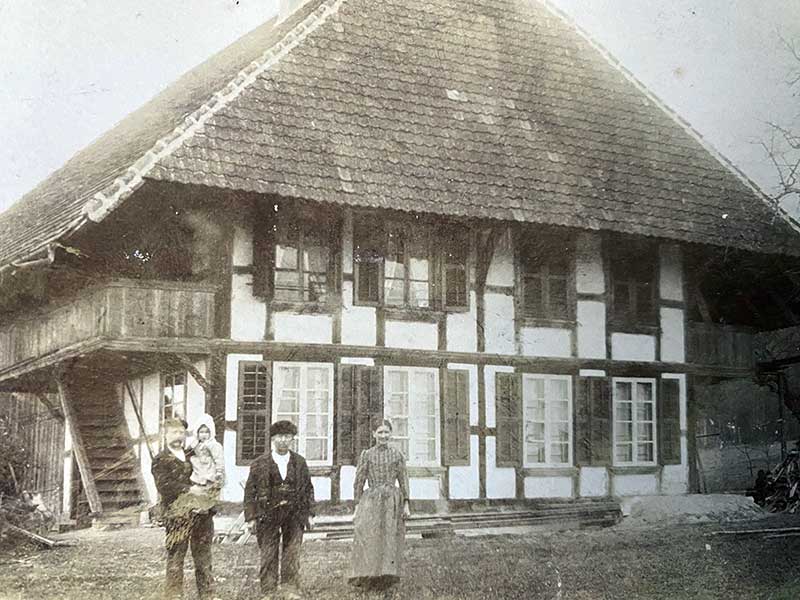
Bertha Gilomen died in 1966 and my mother, Lea and her brother, Bobi were named as the sole heirs in her handwritten will. The lawyer’s will, however, listed twenty-three family members, all of whom were making a claim on my great-aunt’s estate. In a letter to Lea, Bobi wrote: I had no idea that any of these people existed. I was astonished by this remark. How is it possible for so many people from one family to vanish from living memory?
I returned to the Gilomen family tree in search of clues. Bertha and Rosa’s father was married for thirteen years to his first wife and she gave birth to six children before she died in 1885. What became of Bertha’s five siblings?
I have found that it is extremely difficult to conduct genealogical research in Switzerland. There is no equivalent to www.ancestry.com and the Bernese State Department carefully monitors and controls all documented information. Swiss passport holders may visit the archives three times a year, although there are no copying facilities available and photography is forbidden. In 1997 I telephoned the parish of Hoechstetten in Bern and requested a copy of my grandfather’s death certificate.
There was a moment of silence, followed by an audible intake of breath, and I was informed that such information was not available. Death, the woman told me in a tone of undisguised indignation, is a strictly personal matter.
There is a fine line between privacy and secrecy in Switzerland. Sixty-five percent of the country is mountainous, and this, in many ways, has shaped the sociology of its people. Communities are often isolated from one another and survival, especially in winter, requires a resilient and resourceful nature. People work hard and are wary of outsiders.
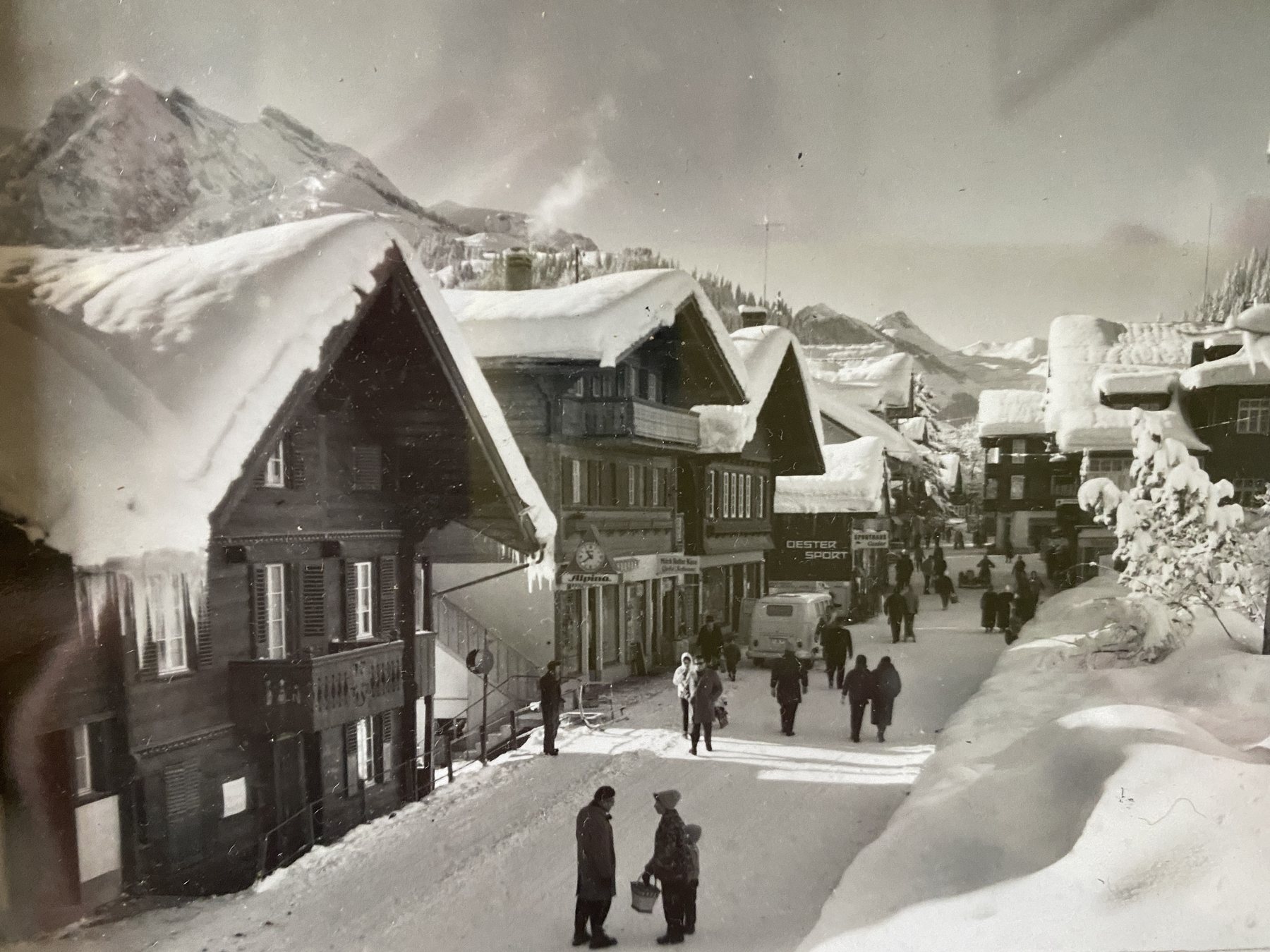
The village of Adelboden in the Bernese Oberland is where my mother went skiing when she was a young girl and it is where, in 1959, I was christened in the village church. During my childhood we spent every Christmas holiday in Adelboden, together with Uncle Bobi, Aunt Heidi and my cousin, Christine.
The Chalet Marlis is still offered as a holiday let and in 2015, I decided to spend a week there while I investigated the mystery of Aunt Bertha’s lost siblings. In Stauffacher’s bookshop in Bern I came across Versorgt und vergessen 2 (Filed away and forgotten) an oral history, documenting the experiences of forty former Verdingkinder. The stories were compiled and published in 2008 by Swiss historians, Marco Leuenberger and Loretta Seglias.
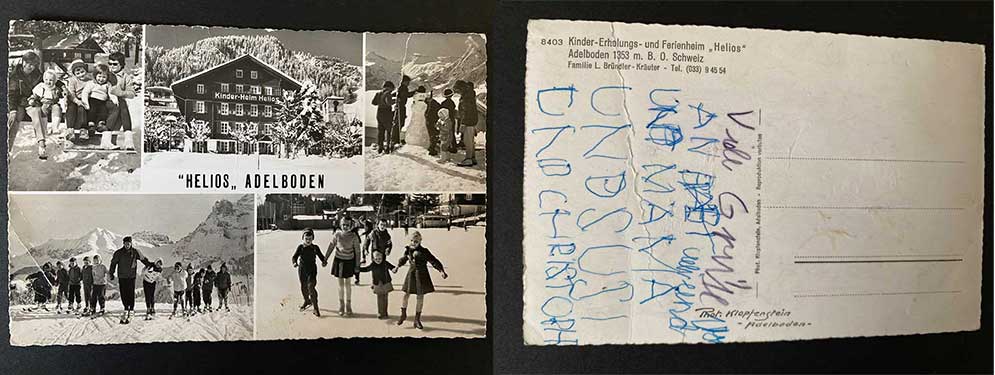
In our early years in Adelboden, I stayed with my aunt and uncle and my parents were guests at the Hotel Schoenegg. At some point, my teenage cousin began to resent sharing her room with an eight-year old and so, in the winter of 1967, I was sent to the local children’s home.
The Kinderheim Helios was a dark and gloomy chalet and I wasn’t at all convinced by my parents’ assurances that it would be huge fun living with lots of other children. Every day we would load our skis onto a sledge pulled by a donkey and walk through the village. If I saw Mum and Dad, I could wave but I wasn’t allowed to speak to them. I knew nothing about the other children’s backgrounds, but it was clear that I didn’t belong, and my occasional supper trips to the hotel only served to highlight my feelings of exclusion.
We were expected to do chores, but we had enough to eat and the adults, although strict, were not unkind. There is no comparison with my brief experience in a children’s home in the 1960s and the ugly and painful lives led by many Heim and Verdingkinder. I can, however, identify, if only on a very small scale, with what all of them describe as feelings of abandonment, despair and a sense of powerlessness. The Helios, I subsequently discovered, was owned by Herr Bruendler, a card-carrying member of the Swiss Nazi Party.